
Introduction
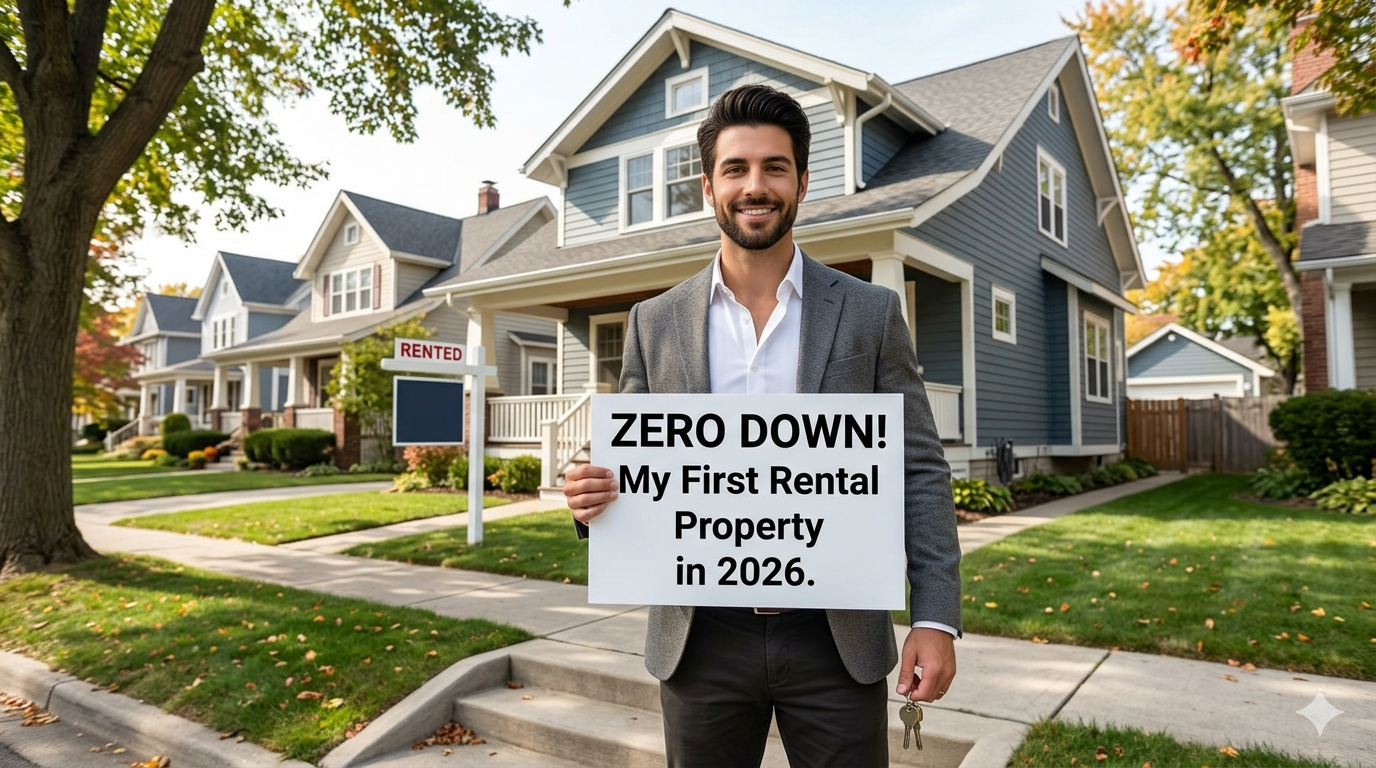
So you want to buy your first rental property.
Maybe you have been dreaming about financial freedom. Maybe you want to build passive income so you can quit your 9-to-5. Or maybe you just want to make your money work harder for you.
Whatever your reason, you are in the right place.
Buying your first rental property can feel overwhelming. There is so much information out there. And honestly, a lot of it is confusing. But here is the truth: You do not need a big bank account or years of experience to get started. Many successful investors started with almost no money. They just followed a clear system.
This guide will give you that system. We will walk through everything step by step. From setting your goals to finding deals to managing tenants. By the time you finish reading, you will have a 90-day roadmap to buying your first rental property.
Let us dive in.
Section 1: Are You Ready to Buy a Rental Property?
Before you start looking at properties, you need to get your own house in order. This is the foundation. Skip this step, and you could run into big problems later.
Define Your “Why” and Set Clear Goals
Why do you want to invest in real estate?
This might sound like a simple question. But your answer will shape everything. Your strategy, your market, and the types of properties you look at all depend on your goals.
Most investors are motivated by three things:
- Cash flow – Monthly income from rent after paying all expenses. This is great if you want regular passive income.
- Appreciation – The property going up in value over time. This is smart if you are investing for retirement.
- Tax benefits – Deductions that lower your tax bill, like mortgage interest, property taxes, and depreciation.
Here is the catch: You cannot optimize for all three equally. A property that gives great cash flow might not appreciate much. A property in a hot neighborhood might have high appreciation but negative cash flow at first.
So figure out what matters most to you. Write it down. Be specific.
Example goals:
- “I want $2,000 per month in passive income within 5 years.”
- “I want to retire at 55 using rental income to cover my living expenses.”
- “I want to buy one property this year and scale to 5 properties in 5 years.”
Check Your Personal Finances
Now let us talk about money. You need to know where you stand before you start making offers.
Here is a quick checklist:
- Know your income and expenses. Track everything for a month. Tools like budgeting apps can help you see the full picture.
- Check your credit score. For most investment loans, you will need at least a 620. A score of 740 or higher gets you the best interest rates.
- Have an emergency fund. You need 3-6 months of personal expenses saved. This is your safety net if things go wrong.
- Know your debt-to-income ratio (DTI). Lenders want this under 43%. That means your monthly debt payments (including your new mortgage) should be less than 43% of your gross monthly income.
Here is some good news: You do not need to be debt-free to start investing. Many successful investors started with student loans, car payments, or a primary mortgage. The key is managing your money well.
Tip: Set aside 2-3 hours this week to review your finances and write down your real estate goals. This is the most important step you will take.
Section 2: Choosing Your Investment Strategy
Now that you know your goals, it is time to choose your strategy. This is where you decide what type of property to buy and how you will make money from it.
Property Types for First-Time Investors
Here are the most common options:
Single-Family Homes
These are standalone houses for one family. They are popular with beginners because they are easier to manage. Tenants usually stay longer. Maintenance is straightforward. The downside? If your tenant moves out, the vacancy rate is 100% until you find a new one.
Multi-Family Properties (Duplex, Triplex, Fourplex)
These buildings have 2-4 units. You can live in one unit and rent out the others. This strategy is called house hacking (more on that soon). The big advantage: If one unit is empty, the others still generate income. The downside? More units mean more maintenance and more tenants to manage. If you are interested in exploring these options further, you can browse available multi-family homes for sale across various markets.
Vacation Rentals (Airbnb, VRBO)
These are properties in tourist areas rented out short-term. They can make more money during peak seasons. Average daily rates for vacation rentals reached $313.61 in January 2025. But here is the catch: Vacancy rates can be high in off-peak seasons, and managing short-term guests takes more work.
Commercial Properties
These include office spaces, retail stores, and warehouses. They can offer long-term leases and stable income. But they require a much larger upfront investment. This is usually too big of a step for first-time buyers.
House Hacking: The Smartest First Move
If you are a beginner, house hacking is hands-down the best strategy.
What is house hacking? It is simple: You buy a property, live in one part of it, and rent out the rest. This could mean:
- Renting out extra bedrooms in a single-family home
- Buying a duplex, living in one unit, and renting the other
- Renting out a finished basement or an accessory dwelling unit (ADU)
Here is why house hacking is brilliant:
Low down payment. Since you live in the property, you can use owner-occupied loans. That means you might only need 3.5% down with an FHA loan. Compare that to 15-25% for a traditional investment property.
Your tenants pay your mortgage. If you rent out enough space, your housing costs could drop to nearly zero. Some house hackers even turn a profit while living for free.
You learn property management firsthand. Living on-site gives you real experience. You will see what it takes to be a landlord. And you will learn what works before you scale up.
Real-world example: Real estate investor Del Walmsley bought his first rental property with just $2,500 down and generated $220 in monthly cash flow, which represented a 132% return on his investment.
Warning: House hacking takes patience. You share space with tenants. Boundaries matter. And you need to follow landlord-tenant laws. But for most beginners, the benefits far outweigh the challenges.
The BRRRR Strategy: Scaling Without New Cash
Once you have your first property, you might want to grow faster. The BRRRR method is a powerful way to do that without constantly saving new down payments.
BRRRR stands for Buy, Rehab, Rent, Refinance, Repeat.
Here is how it works:
- Buy: Find a property priced below market value. Look for homes that need cosmetic updates but are structurally sound. Example: A three-bedroom home listed for $150,000 in a neighborhood where renovated homes sell for $200,000.
- Rehab: Make improvements that increase value. Focus on rental-grade finishes like new flooring, fresh paint, modern lighting, and clean landscaping. Budget for surprises. A practical beginner buffer is often 10–20% contingency.
- Rent: Find qualified tenants. Set a competitive rental rate based on market comparables. Price to rent fast and reliably, then optimize later.
- Refinance: Replace your existing mortgage with a new loan reflecting the higher appraised value. If the lender allows 75% loan-to-value (LTV), you can pull out much of your initial investment. Example: If ARV after rehab is $200,000, a 75% LTV refinance gives you a $150,000 loan. If your total cash into the deal was $150,000, you can recover most of it for the next deal.
- Repeat: Use the recovered funds to buy the next property.
Warning: BRRRR is not magic. The refinance is not guaranteed. Appraisals depend on comparable sales, not your renovation receipts. If the refinance payment leaves no cash flow buffer, one surprise expense can derail you.
Section 3: Finding the Right Market and Property
Once you know your strategy, it is time to find where to invest.
How to Choose an Investment Market
Many new investors get stuck here. They look for the “perfect” market and never make a decision. This is called Goldilocks syndrome, and it is a trap.
Here is the reality: There are hundreds of good markets in the US. You do not need the absolute best one. You just need one that fits your goals.
Here is what to look for:
- Job growth. Cities with growing employment attract renters. People move where jobs are.
- Population trends. Growing populations mean more demand for housing.
- Average home prices and rents. Compare these to make sure the numbers work.
- Property taxes. These vary widely. Some states are under 1%. Others are over 2%. Higher taxes eat into your profits.
- Landlord-tenant laws. Some states are very tenant-friendly. Others favor landlords. Know the rules where you buy.
- Vacancy rates. The national average was 7.0% in Q2 2025. Lower vacancy means less risk of empty units.
Tools to use:
- BiggerPockets “Find a Market” tool
- Neighborhood Watch
- Zillow and Realtor.com
- ChatGPT – you can ask for specific market data
The 1% Rule and Deal Analysis
Now things get math-y. But do not worry. This is simple.
The 1% rule: Monthly rent should be at least 1% of the purchase price.
Example: A $200,000 property should rent for at least $2,000 per month. This is a quick way to screen deals.
But the 1% rule is just a starting point. You also need to calculate:
Cap Rate: Net operating income ÷ Property value. A cap rate of 8-12% is generally good. Higher cap rates mean better returns but often come with more risk.
Cash-on-Cash Return: Annual cash flow ÷ Total cash invested. This tells you how your money is working. For example, if you invest $50,000 and get $6,000 in cash flow per year, your cash-on-cash return is 12%.
Cash Flow: Monthly rent minus all expenses. Expenses include mortgage, taxes, insurance, maintenance, and vacancy reserves.
Example Deal:
$200,000 property, $1,800 monthly rent
- Mortgage: $1,000
- Taxes and insurance: $300
- Maintenance reserve: $200
- Net cash flow: $300 per month
This deal cash flows. It is not a home run, but it is solid for a beginner.
Gross Rent Multiplier (GRM): Another Quick Tool
The Gross Rent Multiplier is another way to quickly assess a property’s value.
Formula: GRM = Property Price ÷ Annual Gross Rent
Example: A property valued at $500,000 that generates $36,000 in gross rent per year ($3,000/month) has a GRM of 13.9.
What it means: The lower the GRM, the better the estimated return the property offers. You can also use GRM to estimate property value: Value = GRM × Annual Gross Rent.
Build Your “Buy Box”
This is a checklist of what your ideal property must have. Examples:
- Price range: $150,000 – $250,000
- Location: Within 30 minutes of where you live
- Property type: Single-family or duplex
- Condition: Needs cosmetic updates but no major structural issues
- Rent potential: At least $1,500 per month
Your buy box helps you avoid wasting time. When a property does not fit your criteria, move on quickly.
Section 4: Financing Your First Rental Property
This is where many beginners get nervous. But there are more options than you think.
Traditional Investment Property Loans
For a standard investment property loan, here is what to expect:
- Credit score: Minimum 620. 740+ for the best rates
- Down payment: 15-25%. Most lenders want 20-25%
- Cash reserves: 3-6 months of mortgage payments saved
- DTI ratio: Under 43%
- Rental income counted: Lenders typically count 75% of expected rent toward your income
Interest rates are higher for investment properties than primary homes. And the down payment is bigger. But these loans are available if you meet the requirements.
Low-Money-Down Strategies
Here is where house hacking really shines. You can buy with much less money down.
- FHA Loan: 3.5% down on 2-4 unit properties if you live in one unit. You must live there for at least 12 months.
- VA Loan: 0% down for eligible veterans. No minimum credit score from the VA (though lenders usually want 620+).
- USDA Loan: 0% down in rural areas.
- Freddie Mac Home Possible: 3% down for qualified buyers.
- DSCR Loan: Qualifies based on property income, not personal income. These typically require 25% down and have higher rates (6.5-8.5%).
The comparison:
- Investment property loan: 20-25% down on a $200,000 property = $40,000-$50,000
- FHA house hack: 3.5% down on a $200,000 property = $7,000
That is a huge difference. And it is why house hacking is so powerful.
Additional financing strategies:
- Seller financing – The seller acts as the bank
- Partnerships – Find a partner with cash; you manage the property
- HELOC or cash-out refinance – Tap equity from your primary home
- Private money lenders – Individuals who lend outside of banks
Real numbers: Del Walmsley says you will typically need $10,000 to $20,000 to get started with a single-family rental property. This covers the down payment and closing costs on a house you buy for around $100,000, renovate for $50,000, and refinance at $200,000 value.
The Power of Leverage
Leverage is using borrowed money to buy assets. Real estate is the ultimate leverage play.
Example: You buy a $100,000 property. With 80% leverage (your money plus a mortgage), your return on cash can jump from 9.5% to 27.9%.
Leverage amplifies both gains and losses. But used wisely, it helps you build wealth faster than buying all-cash.
Section 5: Making an Offer and Closing the Deal
You found a property. The numbers work. Now it is time to make your move.
Submitting a Winning Offer
Work with a real estate agent who knows investment properties. They can help you find off-market deals and negotiate better prices.
The biggest mistake new investors make: Offering too much because they fall in love with a property.
Remember: This is a business, not a dream home. Let the numbers guide your offer. If the seller says no, move on. There are always more deals.
Include contingencies in your offer. These protect you:
- Inspection contingency – You can back out if major issues are found
- Financing contingency – You can back out if your loan falls through
- Appraisal contingency – You can back out if the property appraises below the offer price
Due Diligence and Inspection
Never skip the inspection. This is your chance to catch hidden problems.
Hire a professional home inspector. Consider specialized inspections for:
- Termites
- HVAC systems
- Roof condition
- Plumbing and electrical
Also check for:
- HOA restrictions (some HOAs limit rentals)
- Zoning and rental permits
- Environmental issues (lead paint, mold, asbestos)
The inspection can cost $300-$500. It is worth every penny.
Section 6: Managing Your Rental Property
Once you close, the real work begins. But with good systems, you can make it manageable.
Self-Manage vs. Hire a Property Manager
This is one of the biggest decisions you will make.
Self-Management
- Pros: You save 8-12% of monthly rent in management fees
- Cons: It takes time. You handle late-night calls, maintenance requests, and tenant disputes.
- Best for: Investors who live nearby and enjoy hands-on work.
Hire a Property Manager
- Pros: They handle everything – tenant screening, rent collection, maintenance, evictions
- Cons: It costs 8-12% of collected rent
- Best for: Out-of-state investors or anyone who wants truly passive income
Many beginners start by self-managing. This helps them learn the business. Later, when they have multiple properties, they hire a manager.
Tenant Screening: How to Find Good Tenants
Bad tenants cost thousands of dollars. Good tenants make your life easy.
Here is your screening checklist:
- Credit check: Minimum scores vary by property class. Class A properties often require 680+. Lower-class properties may accept 580+.
- Income verification: Rent should be no more than 1/3 of gross income.
- Rental history: Call past landlords. Ask if they paid on time and took care of the property.
- Background check: Look for criminal history.
- References: Talk to employers and personal references.
Legal note: Always follow the Fair Housing Act. Never discriminate based on race, religion, gender, family status, or disability.
Operating Expenses and Reserves
Many beginners underestimate costs. Do not make this mistake.
Budget for:
- Maintenance: Set aside 1-2% of the property value each year for repairs.
- The 50% Rule: Expect about 50% of rental income to go to expenses.
- Property taxes: 0.27% to 2.23% of property value, depending on location.
- Landlord insurance: $1,200-$2,000 per year.
- Vacancy reserve: Budget for 1-2 months of vacancy each year.
Always have cash reserves for unexpected repairs. A new roof or HVAC system can cost $5,000-$15,000.
Legal Responsibilities for Landlords
You need to know the law. Ignorance is not a defense.
Key areas:
- Landlord-tenant laws – Vary by state and city. Know the rules on security deposits, eviction procedures, and lease renewals.
- Security deposit limits – Most states cap how much you can collect. For example, California limits it to 1 month for unfurnished units, while Texas has no specified maximum.
- Required disclosures – The number required varies by state. California requires 21 disclosures, while Idaho only requires 1.
- Eviction process – Must follow the legal process. Never try to evict tenants yourself.
- Lease renewal – Do not let tenants go month-to-month without a signed lease. Always renew annually.
- Required notice for entry – Most states require 24-hour notice, but some like New Hampshire and New Jersey require tenant consent.
Tip: Have a lawyer review your lease agreement before you use it. Using a generic free lease template found online is risky because each state has its own complex landlord-tenant laws that are subject to frequent changes.
Section 7: Common Mistakes to Avoid
Learning from others’ mistakes is cheaper than making your own. Here are the biggest rookie errors:
- Underestimating expenses. Maintenance, vacancies, and capital expenditures add up fast. Budget conservatively.
- Buying with emotion. Do not fall in love with a property. Love the numbers first.
- Skipping tenant screening. Bad tenants are expensive. Screen thoroughly every time.
- Ignoring local laws. Eviction mistakes can cost you thousands in legal fees.
- Failing to renew leases. Month-to-month tenants can leave without notice. Keep annual leases in place.
- Not budgeting for vacancies. Properties will sit empty sometimes. Plan for it.
- Forgetting tax obligations. Work with a CPA. Depreciation and deductions are powerful but complex.
- Chasing top-of-market rent. If you price rent too high, you lose time. Vacancy costs can destroy your early returns. Price to rent fast and reliably, then optimize later.
Section 8: Tax Benefits of Rental Property Ownership
Real estate offers tax advantages you do not get with stocks or bonds.
Deductible expenses:
- Mortgage interest
- Property taxes
- Repairs and maintenance
- Property management fees
- Insurance premiums
- Depreciation
Depreciation: You can deduct 1/27.5 of the property’s value (excluding land) each year. This is a non-cash deduction that lowers your taxable income.
1031 Exchange: When you sell a rental property, you can defer capital gains taxes if you reinvest the proceeds into another investment property.
Talk to a tax professional. A CPA who specializes in real estate can save you thousands of dollars.
Section 9: The 90-Day Roadmap to Your First Rental Property
Here is a week-by-week action plan:
Weeks 1-2: Foundation
- Define your real estate goals (cash flow, appreciation, or tax benefits)
- Review your personal finances (credit score, DTI, emergency fund)
- Research your investment strategy (house hacking vs. traditional buy-and-hold)
Weeks 3-4: Market Research
- Choose 2-3 target markets based on job growth, population trends, and vacancy rates
- Start following market trends on Zillow, Realtor.com, and BiggerPockets
- Build your “buy box” with specific criteria
Weeks 5-6: Financing
- Check your credit score and address any issues
- Get pre-approved for a mortgage
- Explore low-money-down options (FHA, VA, USDA, DSCR)
Weeks 7-8: Deal Hunting
- Start analyzing deals using the 1% rule, cap rate, and cash flow calculations
- Tour properties that meet your buy box criteria
- Make your first offer (let the numbers guide you)
Weeks 9-10: Due Diligence
- Complete home inspection and any specialized inspections
- Secure final loan approval
- Review and sign closing documents
Weeks 11-12: Management Setup
- Find your first tenant (screen thoroughly)
- Set up systems for rent collection and maintenance
- Decide self-manage vs. property manager
Frequently Asked Questions
How much money do you need to buy a rental property?
You will typically need $10,000 to $20,000 to get started with a single-family rental property, covering down payment and closing costs on a house you buy for around $100,000. However, through house hacking with FHA loans, you can start with just 3.5% down ($7,000 on a $200,000 property). VA loans offer 0% down for eligible veterans.
What credit score do you need to buy a rental property?
Minimum 620 for most investment property loans. Better rates and terms for scores of 740 and higher.
Is the 1% rule realistic?
The 1% rule is a quick screening tool, not a guarantee. Some properties that pass the 1% rule can still lose money after expenses. Others that fall short can be solid investments with strong appreciation potential.
Can you buy a rental property with no money?
Yes, through VA loans (0% down for veterans), USDA loans (0% down in rural areas), house hacking with FHA (3.5% down), partnerships, or seller financing.
Should I hire a property manager?
Property managers cost 8-12% of monthly rent but handle tenant screening, rent collection, repairs, and legal compliance. Self-management is cheaper but requires time, skills, and close proximity to the property.
What is the BRRRR method?
BRRRR stands for Buy, Rehab, Rent, Refinance, Repeat. It is a strategy where investors buy below-market properties, renovate them to increase value, rent them out, then refinance based on the higher appraised value to pull out cash for the next deal.
Conclusion
Buying your first rental property is achievable. You do not need to be rich. You do not need years of experience. You just need a clear plan and the courage to take the first step.
Let us recap the roadmap:
- Define your goals – Why are you investing? What do you want to achieve?
- Check your finances – Know your credit score, DTI, and savings.
- Choose your strategy – House hacking is the best start for beginners. Consider BRRRR for scaling later.
- Research markets – Find cities with job growth, population growth, and reasonable prices.
- Analyze deals – Use the 1% rule, cap rate, cash flow, and GRM calculations.
- Get financing – Explore FHA, VA, conventional, DSCR, and creative options.
- Make an offer – Let the numbers guide your decision.
- Manage your property – Decide if you will self-manage or hire a manager.
- Avoid rookie mistakes – Budget conservatively and screen tenants well.
Your next steps:
- Block 2-3 hours this week to define your goals and review your finances.
- Start researching markets using free tools.
- Reach out to a lender to understand your financing options.
Del Walmsley, who started his real estate journey with just $2,500 down, puts it best: “I was making $220 a month positive cash flow. I had $2,000 invested. That came out to be 132% return… Before this, I had my money in savings accounts, bonds, stocks – all that stuff didn’t work. None of it worked.”
The best time to start was yesterday. The second best time is today.
Visit axisreferral.com for tools, resources, and expert guidance to help you find and finance your first deal.
Disclaimer: This content is for educational purposes only. Always consult with qualified professionals (lenders, real estate agents, attorneys, and CPAs) before making investment decisions.
This response is AI-generated, for reference only.